|
Legislative Analyst's OfficeAnalysis of the 2003-04 Budget Bill |
In California, the federal Medicaid Program is administered by the state as the California Medical Assistance Program (Medi-Cal). This program provides health care services to welfare recipients and other qualified low-income persons (primarily families with children and the aged, blind, or disabled). Expenditures for medical benefits are shared equally by the General Fund and by federal funds. The Medi-Cal budget also includes additional federal funds for (1) disproportionate share hospital (DSH) payments, which provide additional funds to hospitals that serve a disproportionate number of Medi-Cal or other low-income patients, and (2) matching funds for state and local funds in other related programs.
At the state level, the Department of Health Services (DHS) administers the Medi-Cal Program. Other state agencies, including the California Medical Assistance Commission, the Department of Social Services, the Department of Mental Health, the Department of Developmental Services, the California Department of Aging, and the Department of Alcohol and Drug Programs receive Medi-Cal funding from DHS for eligible services that they provide to Medi-Cal beneficiaries. At the local level, county welfare departments determine the eligibility of applicants for Medi-Cal and are reimbursed by DHS for the cost of those activities. The federal Centers for Medicare and Medicaid Services oversees the program to ensure compliance with federal law.
Proposed Spending. The budget for DHS proposes Medi-Cal expenditures totaling $28 billion from all funds for state operations and local assistance in 2003-04. The General Fund portion of this spending ($7 billion) decreases by $3.6 billion, or 34 percent, compared with estimated General Fund spending in the current year. The remaining expenditures for the program are mostly federal funds, which are budgeted at a level ($17 billion) that is about 4 percent less than estimated to be received in the current year.
Most of the reduction in General Fund spending is based upon an assumption in the Governor's spending plan that about $3 billion in Medi-Cal expenditures will be shifted to the counties—along with revenues—as part of a larger realignment of state and county funding and program responsibility. This includes shifting to the counties 15 percent of the nonfederal cost of Medi-Cal health care services ($1.6 billion) and all nonfederal costs for Medi-Cal long-term care ($1.4 billion). The realignment proposal is discussed in more detail in "Part V" of The 2003-04 Budget: Perspectives and Issues.
The spending total for the Medi-Cal budget includes an estimated $1.7 billion (federal funds and local matching funds) for payments to DSH hospitals, and about $4.5 billion budgeted elsewhere for programs operated by other departments, counties, and the University of California.
Federal law requires the Medi-Cal Program to provide a core of basic services, including hospital inpatient and outpatient care, skilled nursing care, doctor visits, laboratory tests and x-rays, family planning, and regular examinations for children under the age of 21. California also has chosen to offer 34 optional services, such as outpatient drugs and adult dental care, for which the federal government provides matching funds. Certain Medi-Cal services—such as hospitalization in many circumstances—require prior authorization from DHS as medically necessary in order to qualify for payment.
Based on recent caseload information, 43 percent of the Medi-Cal caseload consists of participants in the state's two major welfare programs, which include Medi-Cal coverage in their package of benefits. These programs are (1) the California Work Opportunity and Responsibility to Kids (CalWORKs) program, which provides assistance to families with children and replaces the former Aid to Families with Dependent Children program; and (2) the Supplemental Security Income/State Supplementary Program (SSI/SSP), which assists elderly, blind, or disabled persons. Counties administer the CalWORKs program through county welfare offices that determine eligibility for CalWORKs benefits and Medi-Cal coverage concurrently. Counties also determine Medi-Cal eligibility for persons who are not eligible for (or do not wish) welfare benefits. The federal Social Security Administration determines eligibility for SSI/SSP, and the state automatically adds SSI/SSP beneficiaries to the Medi-Cal rolls.
Generally, persons determined eligible for Medi-Cal benefits (Medi-Cal "eligibles") receive a Medi-Cal card, which they use to obtain services from providers. Medi-Cal provides health care through two basic types of arrangements—fee-for-service and managed care.
Fee-for-Service. This is the traditional arrangement for health care in which providers are paid for each examination, procedure, or other service that they furnish. Beneficiaries generally may obtain services from any provider who has agreed to accept Medi-Cal payments. The Medi-Cal Program employs a variety of "utilization control" techniques (such as requiring prior authorization for some services) designed to avoid costs for medically unnecessary or duplicative services.
Managed Care. Prepaid health plans generally provide managed care. The plans receive monthly "capitation" payments from the Medi-Cal Program for each enrollee in return for providing all of the covered care needed by those enrollees. These plans are similar to health plans offered by many public and private employers. More than half (3.2 million of the total of 6.1 million Medi-Cal eligibles in July 2002) are enrolled in managed care plans. Beneficiaries in managed care choose a plan and then must use providers in that plan for most services. Since payments to the plan do not vary with the amount of service provided, there is much less need for utilization control by the state. Instead, plans are monitored to ensure that they provide adequate care to enrollees.
Almost all Medi-Cal eligibles fall into two broad groups of people. They either are aged, blind, or disabled or they are in families with children. More than half of Medi-Cal eligibles are welfare recipients. Figure 1 shows, for each of the major Medi-Cal eligibility categories, the maximum income limit for eligibility for health benefits and the estimated caseload and total benefit costs for 2002-03. The figure also indicates, for each category, whether an asset limit applies and whether eligible persons with incomes over the limit can participate on a "spend down" basis. If spend down is allowed, then Medi-Cal will pay the portion of any qualifying medical expenses that exceed the person's "share-of-cost," which is the amount by which that person's income exceeds the applicable Medi-Cal income limit.
|
Figure 1 Major Medi-Cal Eligibility Categories |
|||||
|
2002-03 |
|||||
|
|
Maximum Monthly Income Or Grant a |
Asset Limit Imposed? |
Spend Down b Allowed? |
Enrollees (Thousands) |
Annual Benefit Costs (Millions) c |
|
Aged, Blind, or Disabled Persons |
|||||
|
Welfare (SSI/SSP) |
$1,364 |
ü |
— |
1,225 |
$9,224 |
|
Medically needy |
954 |
ü |
ü |
254 |
1,684 |
|
133 percent of poverty equivalent |
1,325 |
ü |
ü |
—d |
—d |
|
Medically needy—long-term care |
Special limits |
ü |
ü |
69 |
2,820 |
|
Families |
|||||
|
Welfare (CalWORKs) |
$1,112e |
ü |
— |
1,574 |
$2,563 |
|
Section 1931(b)-onlyf |
1,599 |
ü |
— |
2,485 |
3,557 |
|
Medically needy |
1,190 |
ü |
ü |
—g |
—g |
|
Children and Pregnant Women |
|||||
|
200 percent of poverty—pregnancy service and infants |
$3,107 |
— |
— |
188 |
$631 |
|
133 percent of poverty— ages 1 through 5 |
2,097 |
— |
— |
124 |
124 |
|
100 percent poverty— ages 6 through 18 |
1,599 |
— |
— |
133 |
107 |
|
Medically indigent— ages 6 through 18 |
1,190 |
ü |
ü |
163 |
269 |
|
Medically indigent adults— all services |
1,190 |
ü |
ü |
6 |
70 |
|
Emergency Only |
|||||
|
Undocumented immigrants may qualify in any category and are limited to emergency services (including labor and delivery and long-term care) |
760 |
$1,151 |
|||
|
a Amounts are for an aged or disabled couple (including the standard $20 disregard) or a four-person family with children (including a $90 work expense disregard). |
|||||
|
b Indicates whether persons with higher incomes may receive benefits on a share-of-cost basis. |
|||||
|
c Combined state and federal costs. |
|||||
|
d Enrollment and costs included in amounts of Medically Needy Aged, Blind, or Disabled persons. |
|||||
|
e Income limit to apply for CalWORKs (including a $90 work expense disregard). After becoming eligible, the income limit increases to $1,765 (family of four) with the maximum earned-income disregard. |
|||||
|
f Includes Transitional Medi-Cal, which extends coverage for families who leave CalWORKs or 1931(b)-only for up to 12 months. |
|||||
|
g Enrollment and costs included in amounts for Section 1931(b) family coverage. |
|||||
Aged, Blind, or Disabled Persons. About 1.6 million low-income persons who are (1) at least 65 years old or (2) blind or disabled persons of any age receive Medi-Cal coverage—about 24 percent of the estimated total Medi-Cal caseload for the current year. Overall, the disabled make up more than half (62 percent) of this portion of the Medi-Cal caseload. Most of the aged, blind, or disabled persons on Medi-Cal (79 percent) are recipients of SSI/SSP benefits and receive Medi-Cal coverage automatically.
The other aged, blind, or disabled eligibles are in the "medically needy" category. They have low incomes, but do not qualify for, or choose not to participate, in SSI/SSP. For example, aged low-income noncitizens generally may not apply for SSI/SSP (although they may continue on SSI/SSP if they already were in the program as of August 22, 1996). As another example, some of the medically needy persons have incomes above the Medi-Cal limit and participate on a share-of-cost basis. Included in the number of eligibles in the "medically needy" category are aged, blind, and disabled persons with incomes up to 133 percent of the poverty level. Beginning January 1, 2001, these persons could receive Medi-Cal coverage without a share-of-cost.
More than 870,000 or about 60 percent of the aged or disabled Medi-Cal eligibles are also beneficiaries of Medicare—the federal health insurance program for persons 65 and older and for younger persons with disabilities who cannot work. Medi-Cal generally pays the Medicare premiums and any copayments or deductibles for these "dual eligibles," and Medi-Cal pays for services not covered by Medicare, such as prescription drugs and long-term care. Medi-Cal also provides some limited assistance to a small number of dual eligibles with incomes somewhat higher than the medically needy standard.
The number of Medi-Cal eligibles in long-term care is small—only 68,900 people, or 1 percent of the total caseload. Because long-term care is very expensive, benefit costs for this group total $2.8 billion, or 13 percent of total Medi-Cal benefit costs.
Families With Children. Medi-Cal provides coverage to families with children in three eligibility categories. The first two categories were created by Section 1931(b) of the Social Security Act, which required states to grant Medicaid eligibility to anyone who would have been eligible for cash-assistance under the welfare requirements in place on July 16, 1996. One of these categories consists of CalWORKs welfare recipients who automatically receive Medi-Cal. The second category—referred to as the 1931(b)-only group—consists of families who are eligible for CalWORKs, but who choose only to receive Medi-Cal services. The income limit for families in this second category is 100 percent of the federal poverty level (FPL). However, once enrolled in Section 1931(b) coverage, families may work and remain on Medi-Cal at higher income levels (up to about 155 percent of the FPL indefinitely, or a higher amount for up to two years).
A third eligibility category, referred to as the medically needy, consists of families who do not qualify for CalWORKs, but nevertheless have relatively low incomes. These families have incomes up to 80 percent of the FPL, have less than $3,300 in assets, and meet additional requirements. Families whose incomes are above the medically needy limits, but who meet all of the other medically needy qualifications, may receive Medi-Cal benefits on a share-of-cost basis.
About 24 percent of all Medi-Cal eligibles are CalWORKs welfare recipients. Although CalWORKs recipients constitute the largest single group of Medi-Cal eligibles by far, they account for only 12 percent of total Medi-Cal benefit costs. This is because almost all CalWORKs recipients are children or able-bodied working-age adults, who generally are relatively healthy. Similarly, 1931(b)-only and medically needy families who are Medi-Cal eligible account for 38 percent of all Medi-Cal eligibles and only 16.5 percent of total benefit costs.
Women and Children. Medi-Cal includes a number of additional eligibility categories for pregnant women and for children. Medi-Cal covers all health care services for poor pregnant women in the medically indigent category, which has the same income and asset limits and spend-down provisions as apply to medically needy families. However, pregnancy-related care is covered with no share-of-cost and no limit on assets for women with family incomes up to 200 percent of the FPL (an annual income of about $36,200 for a family of four).
The medically indigent category also covers children and young adults under age 21. Several special categories provide coverage without a share-of-cost or an asset limit to children in families with higher incomes—200 percent of the FPL for infants, 133 percent of the FPL for children ages 1 through 5, and 100 percent of the FPL for children ages 6 through 18. Pregnant women and the FPL-group children also may use a simplified mail-in application to apply for Medi-Cal or Healthy Families Program coverage (for children above the Medi-Cal income limits). Medi-Cal also provides family planning services for women or men with incomes up to 200 percent of FPL who do not qualify for regular Medi-Cal.
Emergency-Only Medi-Cal. Noncitizens who are undocumented immigrants, or are otherwise not qualified immigrants under federal law, may apply for Medi-Cal coverage in any of the regular categories. However, benefits are restricted to emergency care (including labor and delivery). Medi-Cal also provides prenatal care and long-term care to undocumented immigrants. These services, as well as nonemergency services for recent legal immigrants, do not qualify for federal funds and are supported entirely by the General Fund.
The average cost per eligible for the aged and disabled Medi-Cal caseload (including long-term care) is much higher than the average cost per eligible for families and children on Medi-Cal. As a result, almost two-thirds of Medi-Cal spending is for the elderly and disabled, although they account for only about one-fourth of the total Medi-Cal caseload, as shown in Figure 2.
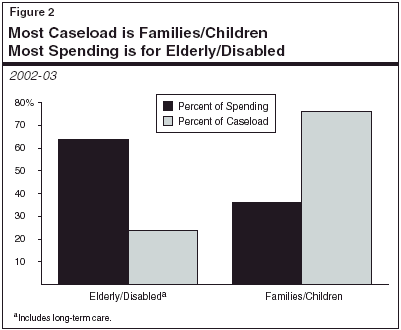
Figure 3 presents a summary of Medi-Cal General Fund expenditures in the DHS budget for the past, current, and budget years.
The budget estimates that for the current year the General Fund share of Medi-Cal local assistance costs will increase by about $863 million (8.8 percent), compared with 2001-02. The bulk of this increase is for benefit costs, which will total an estimated $10 billion in 2002-03.
|
Figure 3 Medi-Cal General Fund Budget Summary a Department of Health Services |
|||||
|
(Dollars in Millions) |
|||||
|
|
Revised |
Change From 2002-03 |
|||
|
|
Actual 2001-02 |
Estimated 2002-03 |
Proposed 2003-04 |
Amount |
Percent |
|
Support (state operations) |
$86.8 |
$93.5 |
$97.8 |
$4.4 |
4.7% |
|
Local Assistance |
|
|
|
|
|
|
Benefits |
$9,155.3 |
$9,992.4 |
$6,295.6 |
-$3,696.9 |
-37.0% |
|
County administration (eligibility) |
495.6 |
493.7 |
606.8 |
113.1 |
22.9 |
|
Fiscal intermediaries (claims processing) |
90.0 |
111.0 |
103.1 |
-7.9 |
-7.1 |
|
Subtotals, local assistance |
$9,740.9 |
$10,597.1 |
$7,005.5 |
-$3,591.6 |
-33.9% |
|
Totals |
$9,827.6 |
$10,690.6 |
$7,103.3 |
-$3,587.3 |
-33.6% |
|
Caseload (thousands of beneficiaries) |
5,914 |
6,477 |
6,268 |
-209.0 |
-3.2% |
|
a Excludes General Fund Medi-Cal budgeted in other departments. |
|||||
General Fund Deficiency in 2002-03. The 2002-03 Budget Act increased General Fund spending only modestly from 2001-02—almost $100 million or 1 percent—and included significant changes intended to hold down the overall growth in expenditures for the Medi-Cal Program. The Governor's January budget proposes a General Fund deficiency in Medi-Cal of $925 million from the levels of spending anticipated in the 2002-03 Budget Act due to increases in caseload, cost and utilization of services, and other factors discussed below. The Governor's package of mid-year revisions would reduce this by about $170 million to a deficiency of $756 million General Fund in the current year if adopted by the Legislature.
Unanticipated Increases in Caseload. Nearly half of the $756 million increase in program costs is for the purpose of accommodating an additional 564,000 Medi-Cal eligibles, about a 10 percent increase over the prior year. The major factors driving the caseload upward are continued growth in the medically needy families caseload resulting from policy decisions to simplify enrollment procedures. This includes decisions to provide continuous eligibility for medical benefits to children 19 years of age and younger and persons leaving the CalWORKs program, as well as the elimination of the quarterly status reports.
Caseloads also continue to grow because of the prior decision to expand eligibility for families with children in the so-called 1931(b) category with income at or below 100 percent of the FPL, as well as the decision to provide Medi-Cal benefits without a share-of-cost to aged, blind, and disabled persons with current income equivalent to 133 percent of FPL or less. Other caseload growth is attributable to the settlement of a lawsuit that requires the department to continue benefits to recently terminated SSI/SSP patients.
Unexpected Increases in Cost and Utilization of Services. Increases in the costs and utilization of services are projected to increase spending by about $220 million. These include continued growth of $78 million in mental health services claims, especially for Early and Periodic Screening, Diagnosis and Treatment services for children. Other significant cost increases include a rise in the number of prescriptions and physician visits per beneficiary, and an increase in the cost per unit of these services. Together these account for an increase of approximately $69 million.
Unrealized Savings Increase Costs. The Governor's budget anticipates that some savings proposed in the 2002-03 Budget Act will not be realized, such as $122 million in projected additional savings from antifraud activities and a $23 million adjustment for caseload savings. The DHS has also determined that there will be a lag in achieving other savings proposals enacted in the 2002-03 budget because of the delay in its passage until September 2002. Specifically, about $81 million was added to 2002-03 spending to reflect savings that cannot be achieved in 2002-03, from various changes in the way the state purchases drugs and certain medical supplies—savings of at least $189 million had been anticipated.
Federal Funds Did Not Materialize. The 2002-03 spending plan assumed that federal legislation would be enacted to provide California with an additional one-time $400 million in federal funds to offset the decrease in the federal cost-sharing ratio (known as the Federal Medicaid Assistance Percentage or FMAP) for the state's Medicaid payments. However, the federal government did not provide such relief to offset state costs. The Governor's budget plan no longer assumes the receipt of these funds.
Other Costs Increasing Current-Year Expenditures. The Governor's restoration in September of a provider rate reduction that was part of the 2002-03 Budget Act will result in an increase in 2002-03 expenditures of $71 million. (As we discuss below, his January 10 budget plan subsequently proposed to impose a more broadly applied reduction in rates for providers in both the current and budget years.) Also affecting the current-year expenditure total is a policy change to increase county administrative funding by about $36 million in order to process annual redeterminations in a timely manner. The administration estimates that this policy change will result in savings of $194 million in the budget year as a result of reduced caseload.
Mid-Year and January 10 Budget Reduction Proposals. A package of mid-year budget reductions proposed by the Governor as well as additional proposals in the Governor's January 10 budget plan would, if adopted, offset part of the additional current-year Medi-Cal costs by nearly $170 million. As noted earlier, the Governor proposed a provider rate reduction of 10 percent affecting physicians, nursing homes, and certain other providers that is expected to reduce state costs by $90 million in the current year. He also proposed the elimination of various optional services for adult beneficiaries to achieve an estimated savings of $68 million, as well as the rescission of the 1931(b) expansion and reinstatement of quarterly status reports. These latter two proposals, which would achieve $11 million in state savings in the current year, are discussed in more detail below.
The Governor's proposed budget estimates that total General Fund spending for Medi-Cal local assistance will be $7 billion in 2003-04, a decrease of $3.6 billion, or 34 percent, below the estimated spending in the current year. If $3 billion in Medi-Cal expenditures were not shifted to the counties as assumed under the Governor's budget plan, the decrease in Medi-Cal expenditures from the previous year would be much smaller—a decline of $572 million or 5.4 percent, rather than the much larger reduction shown in Figure 3. The budget estimates that the Medi-Cal caseload will decrease by 209,100 (about 3 percent) in 2003-04 to a total of almost 6.3 million average monthly eligibles—roughly 18 percent of the state's population.
Aside from the shift of costs and revenues to the counties, most of the reduction in 2003-04 expenditures results from various proposals to cut benefits. General Fund spending for Medi-Cal benefits would decrease by $3.7 billion (37 percent) in 2003-04. Figure 4 (see next page) shows the major components of the change in benefit costs, which we discuss below.
|
Figure 4 Medi-Cal Benefits Major General Fund Spending Changes Governor's Budget |
|
|
2003-04 (In Millions) |
|
|
Realignment |
|
|
Funding shift to counties to reduce costs |
-$3,020 |
|
Savings From Cuts in Rates and Services |
|
|
15 percent rate reductions |
-$630 |
|
Elimination of various optional services |
-304 |
|
Increased savings from various 2002 proposals to reduce costs for drugs, supplies, and services |
-89 |
|
New utilization controls |
-38 |
|
Caseload Reduction Proposals |
|
|
Timely annual redeterminations |
-$194 |
|
Rollback of 1931(b) expansion for parents |
-112 |
|
Reinstatement of quarterly status reports |
-80 |
|
Rollback of coverage for aged, blind, and disabled |
-64 |
|
Caseload Increases |
|
|
Continued growth in caseload for working poor and aged, blind, and disabled |
$395 |
|
Caseload shift due to elimination of the Child Health and Disability Prevention program |
112 |
|
Changes in Payments |
|
|
Loss of Tobacco Settlement Funds |
$235 |
|
Increases in Price and Utilization of Services |
|
|
Increased pharmacy costs |
$144 |
|
Increased cost for Medicare and Medicare HMO premiums |
54 |
Realignment. The Governor's most significant proposal is a realignment or shift of some of the cost of Medi-Cal services to the counties. Under the Governor's realignment proposal, funding responsibility for 15 percent of the state share of the cost of services provided to Medi-Cal beneficiaries would be shifted to the counties for an estimated state savings of $1.6 billion. The entire state cost for skilled nursing services for Medi-Cal patients would also be shifted to the counties for an estimated state savings of $1.4 billion. We are advised by the Department of Finance that these savings to the state from realignment are understated by nearly $500 million because budgetary figures do not take into account the effects of other savings proposed in the Governor's budget in the Medi-Cal program. (The realignment proposal is discussed later in this Analysis and in "Part V" of The 2003-04 Budget: Perspectives and Issues),
Savings From Cuts in Rates and Services. The spending plan takes into account the estimated ongoing effect of several significant budget reductions proposed for the current fiscal year. For example, in addition to a 10 percent provider rate cut imposed in the current fiscal year to save $338 million, the Governor proposes an additional 5 percent rate cut in the budget year to achieve additional state savings of $242 million. The rate reduction would affect nursing home facilities, Intermediate Care Facilities for Developmentally Disabled (ICF-DDs), physician services, pharmaceuticals, dental services, managed care plans, home health care, medical transportation, and certain other medical services. The rate reduction also affects certain non-Medi-Cal programs, including the California Children's Services (CCS) Program; the Family Planning, Access, Care and Treatment Program (Family PACT); the State-Only Family Planning Program; the Genetically Handicapped Persons Program; and the Breast and Cervical Cancer Early Detection Program.
The elimination of various optional services for adults who are not in long-term care, a step proposed by the Governor as a reduction in the current year, would be expanded in 2003-04 to eliminate additional services for increased savings estimated at $304 million. Additional savings of $89 million are expected to result from the full-year implementation in 2003-04 of various strategies included in the 2002-03 Budget Act to reduce costs for prescription drugs, durable medical equipment, and medical supplies. These proposals are also intended to reduce the utilization of services. Savings from an ongoing drug-rebate program are expected to grow by an additional $79 million in the budget year.
Finally, the budget also assumes that about $38 million in General Fund savings would be captured through new utilization controls and various other strategies to reduce the cost of Medi-Cal services.
Proposal to Reduce Caseload Costs. The budget plan would increase funding for county administration of Medi-Cal eligibility activities—the cost of completing eligibility determinations and annual redeterminations—by $113 million. This augmentation is expected to provide counties with the full amount of funding they would need to hire enough staff to process the annual redeterminations in a timely manner. The budget plan assumes this step-up in the completion of redeterminations would result in the disenrollment of 560,000 ineligible Medi-Cal beneficiaries by the end of 2003-04. Because this activity would be phased in over the course of the budget year, the projected effect on the Medi-Cal caseload is a decline of 305,000 monthly eligibles and a state savings of $194 million in 2003-04 as summarized in Figure 4.
The Governor's mid-year revision proposed to reduce caseload by tightening eligibility rules, including rescinding the 1931(b) expansion of Medi-Cal eligibility to working poor families and reinstatement of requirements that parents file quarterly reports to reaffirm their eligibility. The continuation of the 1931(b) rescission in the budget year is anticipated to decrease the average monthly caseload by 185,000 for savings of $112 million. Similarly, the continuation of the Governor's current-year proposal to reinstate quarterly reporting of eligibility for adults is expected to decrease the average monthly caseload by 134,000 for savings of $80 million in 2003-04.
Savings of $64 million are expected from the proposed rollback of the 2001 expansion of coverage for the aged, blind, and disabled persons with income up to 133 percent of poverty. Under the Governor's proposal, individuals with an annual income up to about $8,500 and couples with an income up to $14,700 would be eligible for Medi-Cal without a share of cost.
Caseload Increases. Without the reduction proposals discussed above, the Governor anticipates that caseload costs would increase in 2003-04 by $395 million. These increases are due in part to continued growth from previous eligibility expansions for the working poor and for the aged, blind, and disabled. Also driving up the Medi-Cal caseload are the continued effects of past simplifications in the eligibility process. These include the implementation of continuous eligibility for children 19 years of age and younger. A portion of this growth in caseload has also been attributed to ineligible beneficiaries not being disenrolled on a timely basis.
Medi-Cal caseload costs are expected to increase by about $112 million due to the implementation of a program that will pre-enroll children in Medi-Cal and the Healthy Families Program who are screened for medical problems through the Children's Health and Disability Prevention program. Caseload increases related to other health programs, such as Adult Day Health Care, Family Pact, and the Breast and Cervical Cancer Treatment Program, are expected to increase Medi-Cal costs by nearly $50 million.
Changes in Payments. Revenue estimates underlying the 2002-03 Budget Act anticipate the sale of a state bond backed by future revenues coming to the state from the national tobacco settlement. As a result, $235 million that had been used from tobacco settlement funds to support the Breast and Cervical Cancer Treatment Program and part of the 1931(b) expansion in 2002-03 would not be available in the budget year. Accordingly, the budget plan backfills these lost funds with an increase in support from the General Fund.
Increased Utilization and Cost-of-Services. In line with a continuing trend that has significantly bolstered Medi-Cal Program expenditures in recent years, the 2003-04 budget plan assumes an increase in the cost of pharmaceuticals of $144 million.
Medi-Cal "buy-in" payments for Medicare premiums would also continue to grow. The Medi-Cal Program pays Medicare premiums for Medi-Cal enrollees who also are eligible for Medicare (dual eligibles) in order to obtain 100 percent federal funding for those services covered by Medicare. The budget estimates that the General Fund cost of these so-called buy-in payments will increase by $54 million in 2003-04.
In addition to the cost increases identified in Figure 4, costs are also expected to go up for some of the health programs that are passed through the DHS Medi-Cal budget but actually administered by other state departments. Notably, the cost of mental health services administered by the Department of Mental Health, including children's services provided under the Early and Periodic Screening, Diagnosis and Treatment Program, are expected to increase about $35 million. In addition, costs for the Adult Day Health Care Program administered by the Department of Aging are expected to go up by $32 million because of an increase in the number of persons using these services.
Figure 5 illustrates how Medi-Cal caseload and per-eligible costs have changed since 1993-94, along with projections of these measures for 2002-03 and 2003-04 based on the budget estimates.
The budget projects that in the current year the number of eligibles will grow and the cost of benefits per eligible will decline. The decline in the cost per eligible for the program is projected to continue in the budget year. However, the trend in the number of eligibles is expected to reverse and begin to drop.
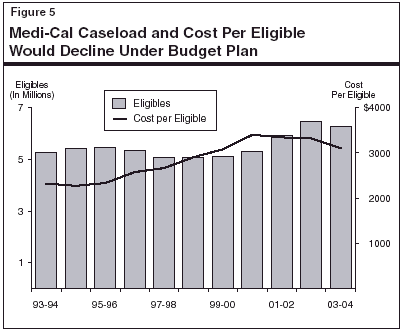
Caseload. Between 1993-94 and 1996-97, the Medi-Cal average monthly caseload was relatively constant, averaging about 5.4 million eligibles. The Medi-Cal caseload subsequently leveled off, and then dropped by almost 300,000 eligibles (5.4 percent) in 1997-98. The change in the Medi-Cal caseload roughly paralleled changes in the CalWORKs welfare caseload. The caseload began a sharp drop at that time in response to the turnaround in the state's economy, and greater emphasis on moving families from welfare-to-work in the wake of the enactment of state and federal welfare reform legislation. Another factor contributing to declining welfare and Medi-Cal caseloads was probably the reluctance among immigrant Californians to make use of public benefits because of concerns about whether such use might adversely affect their ability to naturalize or to sponsor the immigration of family members in the future.
From 1997-98 through 2000-01, the Medi-Cal caseload remained relatively flat even though the CalWORKs caseload continued to decline. The Medi-Cal caseload did not decline during this period primarily because of the backlog of eligibility determinations for former CalWORKs recipients that resulted from the delay in implementation of Section 1931(b) Medi-Cal eligibility by DHS and the counties. In fact, the caseload began to grow rapidly during 2001-02 and 2002-03 primarily due to a variety of eligibility expansions and simplified eligibility processes. Without the Governor's current-year and budget-year proposals to reduce the caseload, the number of people enrolled would continue to grow in the budget year.
Cost Per Eligible. While the caseload has gone up and down, the cost trend per eligible had been almost steadily upward until 2000-01. The average annual growth rate of the estimated cost of benefits per eligible (excluding pass-through funding to other departments and local governments) is 3.1 percent during the period of 1993-94 through 2003-04. This is greater than the rate of general inflation during this period (1.9 percent) as measured by the Gross Domestic Product deflator.
The temporary dip in the cost per eligible that occurred in 1994-95 and 1995-96 was partly the result of a change in the caseload mix, rather than an underlying drop in health care costs. This is because the rapid increase in the number of families on welfare (whose health care costs are relatively low) temporarily reduced the proportion of aged and disabled persons (relatively high-cost groups) in the Medi-Cal caseload, and this change in the mix tended to reduce the average cost per eligible. As the CalWORKs welfare caseload subsequently fell, the elderly and disabled share of the Medi-Cal caseload returned to its earlier level of about 26 percent, and the cost per eligible resumed its growth in 1996-97. Between 1996-97 and 2000-01 the average annual estimated cost per eligible increased by 5 percent.
The slight turnaround in the trend seen in 2001-02 and 2002-03 appears to be the result of an increase in the number of healthy beneficiaries rather than a decrease in health care costs. The simplification that has occurred in the eligibility process means that the Medi-Cal Program probably is retaining a greater number of children and families on its caseload who do not regularly need health care services compared to other beneficiaries, such as the aged, blind, and disabled.
Based on the Governor's budget plan, these costs would decrease by less than 1 percent in the current year but further decrease by nearly 7 percent in the budget year. This sharp decrease can be partly attributed to the Governor's proposals to phase in a provider rate reduction over the current year and budget year of 15 percent, as well as to his proposal to eliminate various optional services for adults.
We find that the budget's overall estimate for the Medi-Cal caseload is reasonable. We will monitor caseload trends and recommend appropriate adjustments at the time of the May Revision.
Figure 6 shows the budget's forecast for the Medi-Cal caseload in the current year and 2003-04. It reflects the Governor's various proposals to reduce caseload, which otherwise would increase by about 5 percent during the budget year.
|
Figure 6 Medi-Cal Caseload Governor's Budget Estimate |
|||||||
|
(Eligibles in Thousands) |
|||||||
|
|
|
|
Change From 2001-02 |
|
Change From 2002-03 |
||
|
|
2001-02 |
2002-03 |
Amount |
Percent |
2003-04 |
Amount |
Percent |
|
Families/children |
4,231 |
4,673 |
442 |
10.4% |
4,480 |
-192 |
-4.1% |
|
CalWORKs |
1,639 |
1,574 |
-65 |
-4.0 |
1,568 |
-6 |
-0.4 |
|
Nonwelfare families |
2,072 |
2,485 |
413 |
19.9 |
2,280 |
-205 |
-8.2 |
|
Pregnant women |
176 |
194 |
18 |
10.0 |
198 |
4 |
2.0 |
|
Children |
343 |
420 |
77 |
22.4 |
434 |
14 |
3.4 |
|
Aged/disabled |
1,456 |
1,552 |
97 |
6.7% |
1,562 |
10 |
0.6% |
|
Aged |
547 |
589 |
42 |
7.8 |
587 |
-2 |
-0.4 |
|
Disabled (includes blind) |
906 |
963 |
57 |
6.3 |
976 |
12 |
1.3 |
|
Undocumented Workers |
227 |
249 |
22 |
9.7% |
220 |
-30 |
-11.9% |
|
Totals |
5,913 |
6,474 |
561 |
9.5% |
6,262 |
-212 |
-3.3% |
The majority of the projected Medi-Cal caseload changes occur in the families and children eligibility categories. The budget estimates that the caseload for this group will increase by 10 percent in the current year but subsequently decrease by 4 percent in the budget year. Nonwelfare families account for most of the changes in Medi-Cal eligible families and children. The budget estimates that the caseload of Medi-Cal eligible nonwelfare families will increase by about 20 percent in the current year, but then decrease by 8 percent in the budget year. While the caseload growth projected in the Governor's budget is significant, our analysis found that recent caseload estimates by DHS have tracked caseload growth fairly closely.
The current-year projected caseload increase for families and children is primarily the result of the continued implementation of continuous eligibility for children, the elimination of the quarterly status reporting requirements for adults, and growth in the 1931(b) program. However, these caseload increases would be reversed in the budget year if the Governor's proposals for the reinstatement of the quarterly status reports for parents and for the rollback of the 1931(b) expansion were adopted. Some additional budget-year growth in this caseload is projected to result from the implementation of a so-called "gateway" in the Children's Health and Disability Prevention (CHDP) program. The Governor's budget estimates that efforts to expedite the enrollment of CHDP children into more comprehensive health care coverage will add 90,000 eligibles to the Medi-Cal Program during 2003-04.
Caseloads for the aged, blind, and disabled are expected to grow by about 100,000 in the current year and an additional 10,000 in the budget year. The growth in the current year is due to underlying caseload growth trends as well as a projected increase in caseload due to a Superior Court ruling in a case known as Craig v. Bonta. This ruling requires DHS to provide Medi-Cal benefits to persons terminated from the federal SSI/SSP program retroactively to June 30, 2002. The slower pace of growth in the budget year is primarily due to a rollback of the January 2001 expansion of eligibility for the aged and disabled.
Major Uncertainty: The Economy. It is highly uncertain at this time whether the caseload trends will be sustained. There are a number of factors that could result in higher caseloads as well as factors that could produce lower caseloads. The biggest single factor contributing to this uncertainty is the continuing softness in the economy. This is the first period of economic sluggishness since the expansion and simplification of eligibility in the Medi-Cal Program and federal welfare reform in 1996. It is possible that a number of the individuals who may have recently become unemployed are already enrolled in Medi-Cal. Although such individuals and their families would shift between Medi-Cal eligibility categories, their impact on overall Medi-Cal caseload and costs would be minimal. Alternatively, children of newly unemployed persons who were not on Medi-Cal previously may now enroll instead in the Healthy Families program.
Potential Risks to Accuracy of Caseload Projections and Cost Estimates. The accuracy of the department's caseload projections and cost estimates are also dependent upon a number of other more general factors. Among the factors that could cause the Medi-Cal program's caseload and cost to vary from the projections are:
Analyst's Recommendation. In summary, we do not recommend a specific budget adjustment at this time because we believe that there is both upside and downside risk to the caseload estimate. This is because it is not clear if the economic downturn will continue and it is uncertain if baseline caseloads will continue to increase as rapidly as projected.
Moreover, at the time this analysis was prepared, the Legislature had not taken action on several of the Governor's major December revision proposals that were intended to reduce program eligibility. Proposals to modify Medi-Cal eligibility rules often require federal approval and there is typically some delay before they can be implemented by counties.
Given this situation, we will continue to monitor the Medi-Cal caseload trends and the Legislature's actions on the Governor's December revision proposals, and will recommend appropriate adjustments at the time of the May Revision.
The administration of eligibility rules is one of the most critical functions for the operation of the Medi-Cal Program. However, over the years, the state has had some significant concerns about the increasing cost of these activities and the performance of the counties, to whom the state has delegated these functions. We analyze and comment on the Governor's proposal to increase county funding and establish state performance standards to ensure that redeterminations of eligibility are completed on a timely basis. We also discuss alternative approaches to reforming the eligibility system. (Decrease Item 4260-101-0001 by $41.3 million and decrease Item 4260-101-0890 by $41.3 million.)
Work Delegated to Counties. One of the most critical functions for the operation of the Medi-Cal Program is the administration of eligibility determinations and redeterminations for applicants and enrollees in the program. The way these functions are carried out has significant ramifications for access for the poor to health care, compliance with federal Medicaid requirements, and overall state costs for the provision of Medi-Cal benefits. The state currently delegates most of this important task to the counties, which are reimbursed by the state for these activities. Counties pay no share of these costs at the present time.
The Governor's budget proposes to provide $494 million from the General Fund ($1.7 billion all funds) in 2002-03 for county administration costs and $607 million from the General Fund ($2 billion all funds) for these activities in 2003-04.
Our analysis indicates that there are a number of issues regarding the current Medi-Cal arrangement by which the state delegates to the counties the duties and funding for eligibility activities.
Costs Are High and Vary Significantly From County to County. Over the years, the state has had concerns with the increasing costs of eligibility determinations. Notably, the cost per Medi-Cal beneficiary to the state for obtaining these services from the counties has been increasing during the past nine years at an average annual rate of 10 percent, as shown in Figure 7. The average annual cost in 2002-03 of Medi-Cal eligibility determinations is expected to be $147.79 per eligible. This amount includes costs related to determining whether applicants are eligible for Medi-Cal, maintenance of case files, outreach activities, and the provision of certain case management services. This cost is significant, especially when compared to the $68.50 average annual cost of eligibility determinations in the state's other major health coverage program for low-income families, the Healthy Families Program.
|
Figure 7 Cost of Eligibility Determinations Keeps Rising |
||
|
(Dollars in Millions) |
||
|
Year |
Average Cost Per Eligiblea |
Percent Change |
|
1994-95 |
$78.08 |
— |
|
1995-96 |
81.55 |
4.4% |
|
1996-97 |
85.64 |
5.0 |
|
1997-98 |
94.17 |
10.0 |
|
1998-99 |
112.18 |
19.1 |
|
1999-00 |
130.31 |
16.2 |
|
2000-01 |
141.30 |
8.4 |
|
2001-02 |
134.61 |
-4.7 |
|
2002-03 (estimated) |
149.79 |
11.3 |
|
Average annual increase |
|
10.2% |
|
a Does not include (1) certain eligibility determination costs in Los Angeles County and (2) some information technology costs. Includes all fund sources. |
||
Our analysis also indicates that the cost of Medi-Cal eligibility administration varies significantly from county to county, even for seemingly comparable counties. The average cost per eligible for the five counties with the largest Medi-Cal caseloads ranges from a high of $353 in
San Diego County to a low of $181 in Los Angeles County. It is unclear why this wide variation in the cost of a determination exists when these counties have relatively similar sized caseloads.
Some Counties' Performance of These Duties Is a Concern. Despite the significant growth in these expenditures, how well counties are performing their delegated responsibilities is a concern. Federal and state law require that nondisability applications be processed within 45 days and that redeterminations of an individual's continued eligibility for Medi-Cal benefits be conducted annually. A review of county eligibility activities conducted by federal authorities in 2001 found that, of four counties reviewed, most but not all applications were processed within the required 45-day timeframe. However, a state review of the timeliness of redeterminations found that Los Angeles County, with more than half of the Medi-Cal population statewide, is completing only 56 percent of its reviews on time.
This situation puts the state at risk of paying the continued cost for health care for individuals who might be ineligible for benefits but who might nonetheless be remaining on the Medi-Cal rolls. This situation also puts the state at risk of having to repay the federal government for the cost of health care provided to persons who are ineligible for Medi-Cal.
Single Point of Entry Increases the Cost and Can Delay Medi-Cal Determinations. In 1999, the state implemented what is known as a "single point of entry" to process all Healthy Families applications and some Medi-Cal applications. The purpose of this process was to improve coordination between the Medi-Cal and Healthy Families programs. The single point of entry provides a uniform, centralized process for receiving, processing, and tracking applications for enrollment in one of the programs.
While this approach has simplified enrollment for potential eligibles, it has increased the cost of Medi-Cal determinations and can delay the process. This is because applications have to go through a two-step process. First, they are submitted to a single point-of-entry for an initial eligibility determination. Those applications initially determined to be eligible for Medi-Cal are next forwarded to each individual's county of origin, where county eligibility workers continue to make final eligibility determinations for Medi-Cal beneficiaries. In contrast, applications for individuals initially determined to be eligible for the Healthy Families Program are processed directly by the state. The state pays a contractor about $21 for each application that it forwards to the county for further processing. The state cost of this process is estimated to be nearly $1.4 million in 2003-04. This two-step process can also delay the processing of applications because of the addition of the contractor's processing time and the time it takes to mail the applications to the counties.
Inconsistencies in County Operating Procedures. The same federal review of county eligibility activities in 2001 mentioned earlier also found major inconsistencies in the way counties are deciding whether individuals are eligible for Medi-Cal benefits. The review found that counties sometimes differ in the way they interpret state-issued guidelines for eligibility determinations. The department contributes to this problem in some cases when it issues eligibility rules in a piecemeal fashion, making it difficult for counties to properly implement policy changes. For example, DHS did not issue comprehensive guidance on how counties should implement 1931(b) eligibility determinations. Instead, it issued a series of written instructions along with numerous subsequent changes and clarifications, that made it difficult for county workers to know how to make the determinations properly.
Funding Mechanism May Reward Inefficiency. The DHS has advised us that it does not know why costs for eligibility determinations are so high or why large disparities in these costs exist among the counties. Our analysis indicates that the specific mechanism now being used by DHS to allocate funding for eligibility administration among counties may be contributing to this situation. This funding mechanism partly bases a county's allocation on the amount of staff it devotes to eligibility determinations. In effect, DHS rewards counties financially for having more staff doing eligibility determination work, while not measuring directly whether those staff are being productive.
Budget Increases Proposed. The Governor's January budget proposes an additional roughly $41 million from the General Fund to enable counties to hire staff sufficient to ensure that only eligible beneficiaries are enrolled in Medi-Cal. Of this amount, nearly $25 million is for the current year and almost $17 million is in the budget year. In turn, the administration is proposing the adoption of changes in state law that would require counties to meet specified performance standards relating to their duties. Under the Governor's proposal, counties that failed to meet the new performance standards would face a 2 percent reduction in their funding for county administrative activities in the following year.
The DHS estimates that these performance standards will result in offsetting savings to the Medi-Cal Program of $194 million from the General Fund ($388 million all funds) in 2003-04. The savings are based on the assumption that county eligibility workers will complete required annual eligibility redeterminations on time for 560,000 ineligible Medi-Cal beneficiaries who would be disenrolled by the end of 2003-04. Because these disenrollments would occur over the course of the budget year, the projected effect on the Medi-Cal caseload is a decline of 305,000 average monthly eligibles.
The budget also proposes to add $448,000 from the General Fund to establish a new unit within DHS (with nine personnel-years in staffing) to ensure that counties comply with the new performance measures.
Basis for Funding Increases Is Questionable. The administration's projection of $194 million in savings during 2003-04 is based heavily on the premise that certain counties are not completing annual redeterminations of eligibility on time primarily because they lack sufficient funding, and therefore staff, to accomplish this task. However, there is little support for this premise. For example, the DHS recently completed a review of a sample of Medi-Cal cases to determine the extent to which redeterminations of eligibility had not been completed as required. Although Los Angeles County had completed only 56 percent of its redeterminations on time, according to DHS it was not underfunded for the processing of its cases. The DHS also examined ten counties that had experienced significant reductions in funding, and found that most did complete their redeterminations in a timely fashion.
Clearly, the relationship between level of funding provided to counties for these tasks and their performance is complex, and raises questions about whether the Governor's proposal to bolster funding for these activities is the most effective approach for increasing county performance.
Other Components of Governor's Plan Have Stronger Basis. Our analysis indicates that the Governor's proposals to establish state performance measures and a monitoring and penalty process will probably be effective steps to ensure county compliance with state and federal law. In our view, this increased level of oversight also is likely to result in significant savings to the state, because counties would now, for the first time, have a specific financial incentive to complete redeterminations on time and to disenroll individuals who are no longer eligible for Medi-Cal.
Analyst Recommendation. Because there is little evidence that the current- and budget-year funding added to the spending plan for the cost of doing redeterminations will improve county performance, we recommend the Legislature not approve these additional expenditures. However, we recommend that the Legislature adopt some components of the Governor's proposal, including the establishment of performance standards for counties and authorization of the additional state staff needed to monitor counties and take corrective actions if counties fail to meet the new standards. The Legislature should go further than the Governor's proposal and direct the department to adopt workload or productivity standards for county Medi-Cal eligibility workers and tie the level of funding to that individual county's performance in meeting these new standards rather than their eligibility staffing levels.
In addition to the Governor's proposal, there are two alternative approaches the Legislature may wish to review when considering how to improve the eligibility determination process. Like the Governor's own proposal, each has certain advantages and disadvantages that we discuss below.
Centralizing Eligibility Determinations at the State Level. Instead of delegating the task of processing Medi-Cal applications to counties, the state could assume this responsibility itself. Presumably, such a change would be phased in gradually to avoid disruption of these functions. For example, DHS could begin such a transfer of responsibility by processing all Medi-Cal applications currently coming into the single point of entry. Under this approach, the state would funnel application data into a centralized computer system and authorize state employees to make final determinations of eligibility rather than continuing the present practice of forwarding Medi-Cal applications to the counties for further action. Establishment of a state-level system for Medi-Cal eligibility would open the way for a simpler and quicker processing of applications using a new Internet-based system called Health-e-App.
Realign a Share of Costs to the Counties. As discussed earlier in this analysis, the Governor's budget proposes to shift 15 percent of Medi-Cal benefit costs to counties along with new revenues to pay for these obligations. Instead of this realignment proposal, the Legislature may wish to consider the alternative approach of realigning a portion of the state costs for eligibility administration to the counties. (The realignment proposal is also discussed in "Part V" of The 2003-04 Budget: Perspectives and Issues.)
Such a shift in program and financial responsibility would be consistent with the principles of realignment given that counties already perform these functions. While counties would have little if any control over the costs of the Medi-Cal benefits under the Governor's realignment proposals, counties would continue to have considerable discretion to manage administrative costs for eligibility determinations. Any efficiencies achieved in this way would also have the effect of further decreasing state expenditures, since these costs would continue to be shared.
The Legislature faces some complex choices in determining how it wishes to finance and organize the critical task of eligibility administration of the Medi-Cal Program. Each of the three options discussed (Governor, state administration, and realignment) has its advantages and disadvantages, and some are more easily implemented than others. In our view, the Legislature requires additional information about the feasibility and merit of some aspects of these options before it can choose from among them. The Legislature should request DHS to assess the merit and feasibility of state administration of eligibility and report back at budget hearings.
Federal survey data suggest that there could be tens of thousands of military veterans in California who could be receiving comprehensive medical services from the Veterans Administration (VA) health care system, but who are enrolled instead in the Medi-Cal Program. If the federal survey data prove accurate, it is possible that the state could eventually save as much as $250 million annually by shifting eligible Medi-Cal beneficiaries to the VA system for their medical services. We recommend that the Department of Health Services be directed to report at the May Revision on the number of veterans eligible for VA health care coverage who are currently enrolled instead in Medi-Cal.
Veterans' Coverage Expanded in 1996. Qualified veterans are entitled to comprehensive medical care and health services through the federal VA health care system. The VA currently operates 11 hospitals and 46 clinics that are located throughout the state in order to serve the needs of the state's veterans.
The Veterans Health Care Eligibility Reform Act of 1996, passed by Congress in October 1996, expanded many of the services provided to veterans. Veterans accepted in the VA health care system are now eligible for a full continuum of care called the "medical benefits package" that includes (1) diagnostic and treatment services, (2) rehabilitation services, (3) mental health and substance abuse treatment, (4) respite and hospice care, and (5) pharmaceuticals provided in conjunction with VA medical treatment. The VA indicates that, if it does not have a hospital or clinic available in a community to provide necessary medical care for a veteran, it will make arrangements for that care to be provided in the community at the VA's expense.
Prompted by the decision of Congress to expand health coverage to veterans, the State of Washington's Medicaid program has ceased the purchase of pharmaceuticals for veterans residing in VA-operated nursing homes. We believe comparable opportunities exist in California to use federal VA funding sources.
Medi-Cal Screens for Veterans. As part of the regular Medi-Cal eligibility screening process, county workers are required to ask applicants whether they have served in the armed forces and have veteran's status. The names of applicants who indicate that they are veterans are then referred to County Veterans Services Offices (CVSOs) so that they can be assisted in obtaining the veterans' benefits to which they are entitled. The referral process is intended to ensure that all possible outside sources of income, such as veterans' aid and attendance payments for the support of personal care, are obtained and available to help reduce costs to the Medi-Cal Program.
We also note that some Medi-Cal eligibility determinations are handled on the state's behalf by the U.S. Social Security Administration (USSSA). However, it was not clear to DHS how and if Medi-Cal eligibles are screened for veterans' status by USSSA.
Federal law requires states to obtain reimbursements from individuals who have another legal entitlement to health care (such as VA health care coverage), but instead obtain their medical care through Medicaid (Medi-Cal in California). As a result, the state must either screen out veterans who should be receiving their care from the VA health care system or seek compensation from them for their Medi-Cal services.
Data Suggest Many Veterans in Medi-Cal. Notwithstanding the existing Medi-Cal regulations and eligibility procedures designed to screen for veterans, a survey conducted by the U.S. Census Bureau indicates that 117,000 California veterans had reported in 2001 that they were receiving Medi-Cal benefits. If this survey data are correct, the state could be expending significant state General Fund resources for Medi-Cal services for veterans who could be obtaining their medical services instead from the VA system. Given that many of these veterans are elderly and thus more likely to require costly medical services, we estimate that the state could be spending as much as $250 million in General Fund resources annually on Medi-Cal benefits for care that they are entitled to receive through VA hospitals entirely at federal expense.
However, DHS is unable at this time to confirm the actual number of Medi-Cal beneficiaries who are veterans. We are advised that, even though data on Medi-Cal applicants who are veterans are collected by county eligibility workers, DHS does not track these data at the state level.
Veterans' Home Care Should Be Viewed Differently. In our review of the Department of Veterans Affairs budget in the "General Government" chapter of this Analysis, we discuss strategies by which the state could enroll additional eligible veterans being admitted to the state's veterans' homes in the Medi-Cal Program. We note that, in the case of these veterans, there is a significant distinction to be made between obtaining medical services and nursing home care under Medi-Cal. Taking this approach in the veterans' homes might permit the cost of their nursing home care to be split between the state and the federal government, rather than supported entirely with state General Fund resources.
We also believe it makes sense for the state to examine the possibility that veterans across the state obtain their medical care from the VA system, instead of from Medi-Cal. As we have discussed, this might permit them to obtain comprehensive medical care in an entirely federally funded system at no expense to the state.
Given the potential fiscal ramifications of this situation, we recommend that the Legislature direct DHS to examine whether veterans constitute a significant portion of the Medi-Cal Program caseload. The DHS has indicated this could involve a review by the department of a sample of Medi-Cal Program casefiles to examine how many persons have been identified on application forms as veterans. The DHS should perform a review to determine the number of veterans eligible for services provided by the VA system that are receiving Medi-Cal benefits and report its findings to the Legislature at the time of the May Revision.
One significant factor driving projected future medical costs is the rise in medical costs for chronic diseases, such as asthma, diabetes, and heart disease, that if managed poorly can lead to expensive hospitalizations of patients. Our analysis indicates that the implementation of a disease management program in Medi-Cal could eventually reduce General Fund costs by as much as hundreds of millions of dollars annually and significantly improve care for patients with the most difficult to control health conditions.
Disease management is a strategy to get individuals to take better care of their chronic health conditions. A chronic condition is defined as one that lasts a year or longer, limits an individual's physical activities, and requires medical care. Many adults suffer from such conditions. It is estimated nationally that more than 25 percent of the adults enrolled in Medicaid have at least one chronic condition. That means that more than 700,000 adult Medi-Cal beneficiaries in California may be living with one or more chronic conditions.
Disease management programs can improve the quality of life of patients by catching health-related problems early, thereby enabling patients to subsequently avoid high cost medical treatments and procedures—especially those associated with hospitalizations. The following chronic conditions are typically covered by disease management programs:
Disease management programs combine the following key approaches to help ensure that patient care is coordinated and that patients adhere to treatment programs: the identification of patients who have or are at risk of suffering from chronic conditions, use of technology to link patients to the medical system, and the use of patient education programs that promote effective preventive self-care. A more detailed explanation of these activities is provided below.
Identification of Patients. Individuals who are willing to participate are identified by a nurse or physician as someone who could benefit from disease management using information about their use of pharmacy and lab services, clinical data, and patient surveys. After adjusting for the severity of health care needs, appropriate interventions are developed to address the special needs of individuals with severe chronic medical problems.
This is often not a simple process. Obtaining and interpreting patient data from Medicaid enrollees can be challenging because individual beneficiaries often repeatedly enroll and disenroll in the program depending on their need for medical services and frequently change residences.
Technology Linking Patients to Medical Systems. Disease management relies upon the use of telecommunications and computer technology to create a more closely knit and better-coordinated working relationship among patients, their nurses or care managers, and their physicians. Typically, patients are given equipment capable of monitoring their vital signs, such as blood pressure and weight. This information is communicated electronically to nurses or care managers on a regular schedule, usually via the Internet or touch-tone telephone. The data are monitored by computer systems. Nurses are alerted if the data seem to indicate that a patient's vital signs have fallen outside of the normal medical parameters that his or her physician has established. The nurse or physician who contacts the patient when this occurs has a wealth of data immediately available to assist in making care-related decisions. In some cases, patients will also receive visits at home from care managers.
Patient Education to Encourage Self-Care. Patients are taught to better manage their own health care with intensive education aimed at increasing their understanding of their chronic diseases. This educational process includes regularly scheduled phone calls from care managers to patients that provide basic information to patients about their disease, personal coaching on subjects such as nutrition and exercise, and help in identifying for patients how they can modify their behavior in ways that will improve or maintain their good health. For example, a nurse might review with a patient the medications she is taking and the frequency at which she is taking them in order to ensure her compliance with her prescriptions. Under the disease management approach, patients are encouraged to access information about their own vital signs so that they can easily monitor their own progress in recovering from a disease or maintaining their health.
Disease Management Differs From Medical Case Management. The Medi-Cal program currently does not provide disease management services. In some instances, the state will provide medical case management services to Medi-Cal patients that differ from disease management services. Disease management services are generally less intensive, are more long term in nature, and are applied to a broader population than medical case management.
Typically, under medical case management, nurses provide services to a relatively small number of high-cost patients to reduce their cost of care and to ensure the continuity of their care. Rather than chronic conditions, medical case management is typically provided to patients who are recovering from a catastrophic illness or event, such as an automobile accident. While disease management is ordinarily ongoing, medical case management more typically involves the provision of temporary services that are intended to facilitate a patient's discharge from the hospital and prevention of their readmission.
Savings Could Be Significant. Studies of the efficacy of disease management programs have found that monitoring chronic conditions and improving the coordination of care can reduce the number of emergency visits or hospital stays of patients. These studies indicate that health care costs related to chronic conditions could be reduced by as much as 50 percent. These savings would be partly offset by the cost of disease management services, but in a number of cases the implementation of a disease management approach has resulted in a significant net reduction in health program costs.
For example, a 1998 study of a program that involved the interactive home monitoring of Medicaid patients who had previously been treated for congestive heart failure found that it significantly reduced their returns to the hospital for additional medical assistance. The program resulted in a 44 percent decrease in readmissions of patients to hospitals and, despite the intensive nature of the disease management interventions, resulted in a net savings of $460 on average for each patient involved in the program.
Another study of heart failure patients in 1999 found that patients enrolled in an intervention program incurred overall health costs that were significantly less than for comparable patients who were not enrolled in the program. Patients in the intervention program were required to monitor their blood pressure, pulse, weight, and other symptoms at home and to contact their physician if the results concerned them. Patients also received weekly educational mailings and a ten-minute phone call from a nurse to discuss the materials, new symptoms, medication changes, and physician visits.
The annual health care costs of enrolled patients was approximately $9,800 (including the less than $2,400 annual cost of the intervention program), while patients who were not enrolled cost almost twice as much—about $18,800 per year. These savings were attributed to a reduced number of claims for medical services, a reduction in hospital admissions, and a reduction in the number of days a patient spent in the hospital when they were admitted.
There is evidence that disease management can also reduce the costs of other types of medical conditions besides heart problems. A 1999 study found that Virginia's disease management program for asthma patients enrolled in Medicaid reduced their collective number of emergency visits by about 41 percent. An analysis of the program found it to be cost-effective, with projected direct savings to the Medicaid program of $3 to $5 for every dollar spent for support of the disease management pro gram. That analysis indicated that, had all Medicaid recipients with asthma claims participated in the program, the savings in overall medical costs would have ranged from approximately $218,000 to $1.2 million depending upon the severity of the patients' condition.
Programs Must Be Carefully Designed and Implemented. If disease management programs are not carefully designed and implemented, the evidence indicates that they will not necessarily prove successful. Florida's first efforts a few years ago at implementation of a disease management strategy in its Medicaid program did not achieve the projected savings of $113 million over four years, and may have actually cost the state more money than the program saved. Florida's failure to achieve the projected level of savings has been attributed to two main factors: an initial inability to correctly estimate the potential savings from the program, as well as specific problems in its approach to disease management.
In regard to the second factor, Florida's implementation approach was to contract with a number of disease management vendors, with each one hired to focus its efforts on one particular type of disease. This approach proved unsuccessful primarily because patients often have a combination of chronic conditions. Treating one disease at a time instead of implementing a comprehensive approach to a patient's entire set of chronic conditions appears to have been inadequate to improve patients' health care.
Although Florida's disease management program as a whole did not achieve savings, it should be noted, some of its individual efforts were successful. For example, the chronic health failure program, which has operated for more than two years in a fee-for-service medical system, has achieved 16 percent gross savings in the first year (a net savings of approximately 6 percent according to a preliminary estimate). The program achieved a 40 percent reduction in the utilization of medical services compared to another group of patients who for testing purposes did not receive such services.
Some States Have Focused Their Programs on Prescription Drug Use. Some disease management programs have effectively involved pharmacists in ensuring that patients take their prescription drugs in compliance with doctors' orders. A program for patients suffering from high cholesterol levels—a condition related to heart and other health problems—has demonstrated a positive effect on patients. One study found that, after one year, about 70 percent of patients continue taking their medicine compared to 30 percent nationally and about 85 percent of the same patients have healthy cholesterol levels compared to 45 percent nationally. Ensuring that patients take their medications properly can reduce health care costs by decreasing the number of unnecessary emergency room and hospital visits.
Not surprisingly, the implementation of disease management programs that focus on prescription drugs can result in an increase in drug utilization and expenditures for those medications. In this case, however, this is a desirable result because of the much larger and offsetting savings associated with a reduction in the number of hospitalizations from keeping patients with chronic conditions healthy.
One state is taking an approach that guarantees that it will achieve savings, at least initially, from integrating disease management practices into its Medicaid program. Florida has contracted with a drug manufacturer that has guaranteed the state savings of $15 million in the first year and $18 million in the second year. The state has also contracted with another drug manufacturer for expected further savings of $16 million.
Other State and Federal Authorities Turning to Disease Management. The expansion of disease management programs is now a national trend. A number of states plan to implement disease management programs this year in an attempt to achieve savings in their Medicaid programs. Missouri will implement disease management programs for asthma, congestive heart failure, diabetes, and chronic obstructive pulmonary disease. Mississippi plans to implement such programs for asthma, diabetes, and hypertension. Iowa intends to enhance its existing programs, while the State of Washington recently signed agreements with three disease management companies providing the state a 5 percent guarantee of net savings (after disease management program costs have been taken into account) for Medicaid patients suffering from asthma, diabetes, congestive heart failure, and kidney disease.
The federal Medicare program launched a three-year disease management pilot project for its chronically ill beneficiaries early last year. The project plans to target patients with advanced-stage congestive heart failure, diabetes, and coronary heart disease. Medicare is paying disease management organizations a monthly premium for coordinating the care of patients in the studies and for the cost of prescription drugs.
We recommend the enactment of legislation to guide the implementation and evaluation of disease management pilot projects for the aged, blind, and disabled patients enrolled in fee-for-service Medi-Cal. Such pilot projects would enable the Legislature to identify the most cost-effective disease management programs for the Medi-Cal population. We estimate that the implementation of a full-scale disease management program for the aged, blind, and disabled could result in future net savings to the General Fund of up to several hundreds of millions of dollars annually.
Aged, Blind, and Disabled Could Benefit the Most. A growing body of scientific studies and the experiences of other states indicate that the effective implementation of disease management programs could reduce the state's health care costs and improve care for the more than 1 million aged, blind, and disabled Medi-Cal patients currently enrolled in Medi-Cal's fee-for-service health care delivery system. While some children also suffer from chronic conditions amenable to disease management, these older Medi-Cal beneficiaries are the ones most likely to fully benefit from a disease management program. This is because they generally consume the most health care dollars. (They are about 24 percent of the Medi-Cal population, but 64 percent of Medi-Cal program costs) and they are living longer with multiple chronic conditions.
A Fragmented Fee-for-Service System. Despite this situation, most aged, blind, and disabled participants in Medi-Cal are placed in a health care environment poorly designed to meet their complex medical needs—the fee-for-service reimbursement system. Under this system, providers are paid for each examination, procedure, or other service that is furnished and patients can obtain services from any provider who has agreed to accept Medi-Cal payments.
The fee-for-service system is a fragmented and uncoordinated approach to the delivery of care often not well-suited for the care of individuals suffering from chronic medical conditions. For example, physicians participating in Medi-Cal are not required to communicate with one another about the care that they might be providing to the same patient. That could make it very difficult for a patient with significant health care needs to follow multiple treatment plans that include monitoring themselves, taking medication, and making other lifestyle changes.
General Fund Savings Could Be Significant. It is difficult to provide a precise estimate of the savings that would result from the implementation of a full-scale disease management program for aged, blind, and disabled patients enrolled in the Medi-Cal fee-for-service program. This is because the level of savings would depend on the types of disease management services provided and upon which program recipients were targeted to receive the services. However, for illustrative purposes, based upon the range of savings that other states have been able to achieve with disease management, we estimate that the gross savings to the General Fund could range from $387 million to $601 million annually.
Our savings assumes that these services are provided to the approximately 440,000 aged, blind, and disabled patients who have at least one chronic illness. The total cost of these patients to the Medi-Cal Program in 2001 was more than $5.3 billion ($2.7 billion from the General Fund), with the annual cost per patient ranging from $6,000 to $76,000 and the average cost being $12,000 per client.
The cost of providing disease management services that could significantly reduce these medical bills is comparatively low—data from other states indicate these costs typically range from $900 to $2,400 per person annually. Our estimate assumes that a program would be designed in a cost-effective manner and thus would have an average annual cost of about $1,650 per person and a total cost of $360 million General Fund for serving the aged, blind, and disabled population. However, management of some diseases is more costly than for others. For example, the average annual cost of providing disease management services for someone with diabetes can cost as much as $9,600 annually. Programs that focus on pharmaceutical use and that directly reimburse pharmacists for providing such services could cost much less.
Figure 8 shows for illustration purposes the probable net savings the state could achieve from such a program after the cost of the disease management services have been taken into consideration. The net savings to the General Fund range from $27 million to $241 million—equivalent to between 1 percent to 9 percent of the cost of the care of these aged, blind, and disabled beneficiaries in 2001. Our savings estimates are in line with the various levels of net savings that have been achieved in other states that have tested the disease management approach. The actual amount of savings that could be achieved in the Medi-Cal Program will vary significantly depending upon the specific disease management services for which the state contracted, the cost of those services, and the groups of program beneficiaries selected to receive the services.
|
Figure 8 Significant General Fund Savings Possible From Disease Management |
|||||
|
(In Millions) |
|||||
|
Percent net savings |
1% |
3% |
5% |
7% |
9% |
|
Additional cost of disease management servicesa |
$360 |
$360 |
$360 |
$360 |
$360 |
|
Savings from implementing disease managementb |
-387 |
-441 |
-493 |
-548 |
-601 |
|
Net savings |
$27 |
$81 |
$133 |
$188 |
$241 |
|
a Based on estimated average annual cost of $1,650 per person. |
|||||
|
b Estimated level of savings is based on the experience of other state Medicaid programs. |
|||||
Savings Levels Could Be Guaranteed. Using the same general approach as is now being implemented in Florida and Washington, we believe a disease management program could be structured in California in a way that would guarantee savings to the state, or at least ensure that such a program would result in no additional costs to the state if it were unsuccessful. This could be accomplished by contracting for such services in a way that places the disease management contractor's fees at risk depending upon the contractor's ability to achieve an agreed-upon level of savings. If the contractor were unable to achieve that savings level, its fee payments from the state would be reduced or eliminated altogether.
Net Savings Unlikely in the Budget Year. One important consideration for the Legislature is that any net savings from implementation of a disease management program in 2003-04 would probably not be realized until 2004-05. Such programs often require a significant up-front investment of resources for chronic care management services that offset potential savings in the short run. However, they tend to reap significant savings in the long term by reducing hospitalization and other expensive medical services. A long-term investment in such efforts may nonetheless make sense, given projected increased costs in Medi-Cal over time.
Analyst's Recommendation. As noted above, our analysis suggests that the implementation of a disease management program, if structured correctly, could eventually result in significant net General Fund savings to the state. However, a full-scale implementation of such a program within Medi-Cal may not be feasible at this time because it is not yet clear which specific approaches to disease management in Medi-Cal would work best and be most cost-effective. Also, the large budget shortfall now facing the state makes it difficult to provide the substantial initial investment in disease management programs needed to yield savings. Given these circumstances, we believe it makes sense at this time for the state to take some modest first steps to explore the potential of disease management programs—steps that could eventually set the stage for a full-scale implementation of this approach and significant state savings in the Medi-Cal Program.
Accordingly, we recommend that the Legislature budget the necessary funds and adopt statutory language directing DHS to conduct a few small pilot projects in disease management for three years. These projects would be designed to improve treatment of a variety of chronic conditions such as diabetes, asthma, congestive heart failure, chronic obstructive pulmonary disease, coronary artery disease and hypertension. We estimate that the cost of such pilot projects that focus on a portion of these chronic conditions would be about $650,000, with a state General Fund appropriation of $323,000 needed in the 2003-04 fiscal year to get such a project under way. (This amount could be higher or lower depending on the scope of the pilot program.) It is likely that the pilot projects would achieve a small amount of savings initially that could grow to reduce or eliminate the cost to the state of the projects in the future. In addition, based on our analysis, it appears that funding from nonprofit organizations would be available to conduct an evaluation that could lower the state's financial commitment or expand the scope of the pilot projects. Legislation (AB 1949 [Baca]) to initiate a disease management program in Medi-Cal was proposed but not enacted during the 1997-98 legislative session. We recommend that the statutory language adopted at this time include the following provisions:
We believe that this approach would provide the Legislature with a scientifically valid and relatively low-cost approach to evaluating the potential benefits of disease management for the Medi-Cal Program. Depending on the success of the pilot projects, the disease management services could be expanded to additional Medi-Cal patients in the future when the state may be better able to afford the substantial investment of funds needed to expand such programs.
We withhold recommendation on a proposal to continue three limited-term staff and to provide increased funding for a planned redesign of the Medi-Cal budget estimate because it is not clear how the Department of Health Services intends to move forward with the completion of the project.
Request for Funding Premature. The Medi-Cal budget estimate is a document that DHS prepares twice a year that forecasts expenditures, eligibility, and the impact of regulatory and policy changes on the Medi-Cal Program. The computer system that is used to help prepare the document is outdated and cannot provide key information that the Legislature needs to assess Medi-Cal spending proposals. An information technology project now underway, scheduled at one point for completion in April 2003 but now delayed, would attempt to remedy these and other problems with the Medi-Cal estimate.
At the time this analysis was prepared, we were advised that the department was considering making significant modifications to its budget request to support the information technology project for the Medi-Cal estimate. The budget proposed to continue three limited-term positions for two years and $232,000 General Fund for consulting services and software. Until the department reaches a final decision about the matter and provides the Legislature with additional information about how it intends to proceed with the redesign of its estimate, the Legislature is not in a position to act on the budget request. Accordingly, we withhold recommendation on the proposal at this time.
The Bureau of State Audits (BSA) has recommended that the Department of Health Services (DHS) do more to ensure that it receives fair and reasonable prices for medical supplies, durable medical equipment, and hearing aids. We recommend that DHS report at budget hearings regarding what steps it is taking to comply with the BSA's recommendations to ensure that it gets the best price for these items.
BSA Audit Findings. A December 2002 report by Bureau of State Audits (BSA) found that DHS does not adhere to its own policies that were intended to ensure that it receives fair and reasonable prices for certain medical supplies and durable medical equipment (DME) that it provides for Medi-Cal beneficiaries. One example cited by BSA involves the purchase of wheelchairs for Medi-Cal beneficiaries. The DHS generally provides reimbursement only for those DME items that have been screened and placed on an approved list, but exceptions are allowed in certain cases. A written policy issued by DHS in June 1998 allows field office staff to approve the reimbursement of wheelchairs which are not on the approved list only if providers provide specific documentation justifying the purchase of the equipment. However, BSA determined that DHS staff are following an earlier policy memorandum that allows the reimbursement for unlisted wheelchairs without additional documentation.
The BSA found other problems, indicating, for example, that DHS lacks product and price comparison data needed to determine whether the costs the state is being charged for DME items, as well as other types of medical supplies, are reasonable.
We are concerned about such practices because they could result in the state paying more than it should for DME items. For example, unlisted wheelchairs cost the state $3,121 each on average, more than five times the $622 average cost of a listed wheelchair. The practice of buying these items without appropriate documentation justifying the purchase, and without the data needed to determine if the prices being charged are reasonable, increases the risk that the state is purchasing higher-cost unlisted wheelchairs in cases where less expensive listed wheelchairs would be sufficient to meet the needs of Medi-Cal beneficiaries. Notably, since 1998, expenditures for unlisted items have grown faster than expenditures for other listed DME items.
The BSA also found that DHS is unprepared to implement two measures which the DHS has assumed would result in significant savings in Medi-Cal expenditures for DME. First, the department plans to convert its existing billing codes to universal product numbers (UPN), therefore providing more relevant and current information on pricing and products. The department indicates that this change would result in annual savings of $30 million because it would allow the state to obtain rebates from the manufacturers of medical supply items that are identified using UPNs. However, BSA found that this approach may not be viable because DHS has not thoroughly assessed problems in the implementation of this strategy nor its full potential cost.
The BSA also found problems with the way DHS was implementing proposals to achieve General Fund savings in the program by negotiating contracts for DME and medical supplies. The Governor's budget plan assumes that such negotiations would result in an additional $30 million General Fund savings to the state in 2003-04. However, BSA concluded that DHS had not focused on clear objectives and staffing needs or determined the willingness of providers and manufacturers to cooperate in these efforts. The consequences could be lower savings than the amounts assumed in the Medi-Cal Program budget and consequentially higher costs to the state General Fund, and the possibility that some patients who needed DME might find it more difficult to obtain these items through medical providers.
Analyst's Recommendation. We recommend that the Legislature direct DHS to report at budget hearings on the following issues related to implementation of the BSA audit: